Quick answer: Replacement windows can reduce traffic noise, but they cannot guarantee a quiet room. For road noise, ask for the OITC rating of the complete window, not just its glass or its STC rating. Then check installation details and other sound paths, including doors, vents, walls and air-conditioning openings. Laboratory ratings compare tested products; they do not predict the exact noise reduction inside your home. (store.astm.org)
1. Start with the room and the noise—not a “soundproof” label
Before requesting replacement-window quotes, describe the problem precisely: which room is affected, when noise is most disruptive, and whether you mainly hear engine rumble, passing tires, horns or individual vehicles.
This matters because different noise sources contain different mixes of frequencies. ASTM cautions that a single rating cannot fully describe how a window handles every outdoor sound. Even two assemblies with the same rating can transmit different proportions of low- and high-frequency sound. (store.astm.org)
Make a short project brief:
- Priority room: for example, a street-facing bedroom.
- Problem periods: overnight truck movements or morning traffic.
- Existing conditions: damaged weatherstripping, difficult locks or visible perimeter gaps.
- Other openings: an exterior door, wall vent or window air conditioner.
- Goal: less intrusive traffic noise—not complete silence.
Inspect accessible areas without removing trim or disturbing building materials. Record whether windows close and lock normally. Treat your observations as a starting point for assessment, not proof that the glass is the main problem: sound can enter through gaps, windows and doors, or the surrounding building structure. (faa.gov)
2. STC versus OITC: which rating matters for traffic?
STC—Sound Transmission Class—summarizes sound-insulation performance using ASTM E413. Its intended relationship is primarily to speech, television, radio and similar sounds. ASTM specifically warns that transportation noise needs more detailed frequency analysis rather than reliance on this rating alone. (store.astm.org)
OITC—Outdoor-Indoor Transmission Class—uses ASTM E1332 to assess exterior sound isolation. Its reference sound includes strong low-frequency content, making it a more relevant starting point for many transportation-noise comparisons. Higher numbers indicate greater isolation against that reference sound. (store.astm.org)
| Rating | Useful role when shopping |
|---|---|
| STC | A supplementary comparison, particularly for speech-like sound |
| OITC | A starting comparison for outdoor transportation noise |
| Frequency-by-frequency transmission loss | A closer assessment of a particular rumble, tone or traffic mix |
OITC is not a perfect match for every road. ASTM notes that tire-dominated high-speed freeway noise, sirens and other sources may differ from its reference spectrum. For a difficult site, ask an acoustical consultant to compare the actual noise with the window’s frequency-by-frequency test data. (store.astm.org)
Do not interpret an STC number as an OITC number. They are different rating systems, not interchangeable scores. (store.astm.org)
3. Ask for whole-window evidence, not a glass-only claim
A glass sample and a complete operable window are different test specimens. When shopping for a replacement unit, request evidence covering the assembly you intend to buy—not merely an acoustic number associated with its glazing.
ASTM E90 measures airborne sound transmission through a laboratory specimen, which can include a window. The laboratory is designed to make that specimen the principal sound path. A real room has additional paths, so the laboratory result is not a direct prediction of installed room performance. (store.astm.org)
Ask the supplier for:
- Manufacturer, series and operating style.
- Exact glazing option or order code.
- Whole-window STC and OITC ratings.
- Laboratory report number and test date.
- Tested dimensions and configuration.
- Confirmation of how the evidence applies to your proposed size and any joined units.
The last questions matter. ASTM identifies specimen size and edge restraints as factors that can affect low-frequency results and OITC. (store.astm.org)
A useful request is:
“Please identify the complete-window acoustic test supporting this quote and explain any differences between the tested specimen and my order.”
If a table says “not tested,” treat that as missing evidence—not as zero performance, and not as permission to borrow another configuration’s rating.

4. Worked example: compare the exact glass configurations
Andersen’s published 100 Series acoustic summary, dated October 14, 2025, provides a useful example. For its AND-N-84 casement, it lists these results from independent third-party testing: (andersenwindows.com)
| Glass configuration | STC | OITC | Listed test report |
|---|---|---|---|
| Standard dual pane | 30 | 25 | ESP026872P-3 |
| STC Upgrade, mismatched panes | 33 | 28 | ESP026872P-5 |
| Standard triple pane | 30 | 24 | NOAL 25-08008 |
These are published results for specified configurations, not a brand recommendation or a room-noise guarantee. (andersenwindows.com)
Suppose you are comparing the standard dual-pane option with the mismatched-pane upgrade:
- The published STC increases by 3 points.
- The published OITC also increases by 3 points.
- The upgrade therefore has the stronger published rating under both methods.
- That does not establish that your bedroom will become exactly 3 decibels quieter. Other sound paths and site conditions remain relevant. (andersenwindows.com)
The triple-pane row is equally instructive: it does not outperform the other two configurations acoustically. Do not assume that more panes automatically mean better traffic-noise control. Verify availability and the applicable current documentation before ordering. (andersenwindows.com)
5. Glass construction matters more than pane count alone
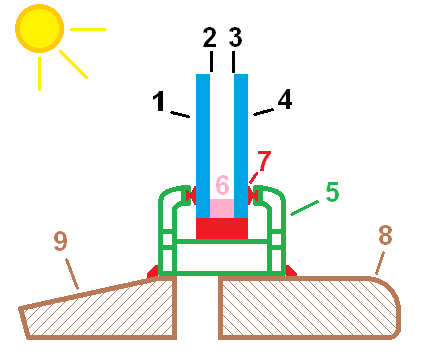
Useful acoustic options can include panes of different thicknesses and laminated glass. Andersen describes its mismatched-pane upgrade as combining different glass thicknesses; laminated glass combines glass with an interlayer. Pane thickness and spacing also influence acoustic behavior. (andersenwindows.com)
When comparing options, separate the description from the evidence:
- “Triple pane” identifies a construction feature, not an acoustic outcome.
- “Laminated” identifies a glass construction, not one universal STC or OITC.
- “Acoustic upgrade” needs an exact configuration and supporting rating.
- “Thicker glass” still needs to be assessed as part of the complete window.
The practical rule is simple: use construction details to understand an option, then use the corresponding whole-window results to compare it.
If the salesperson offers only the highest number available anywhere in a product range, ask them to identify which configuration achieves it. Do not assume that a casement result applies to a sliding window or another glass package.
Andersen itself notes that moving from dual to triple glazing does not necessarily deliver the acoustic improvement a homeowner expects; glass designed specifically for sound reduction may be the more relevant comparison. (andersenwindows.com)

6. Air leakage and installation can undermine better glazing
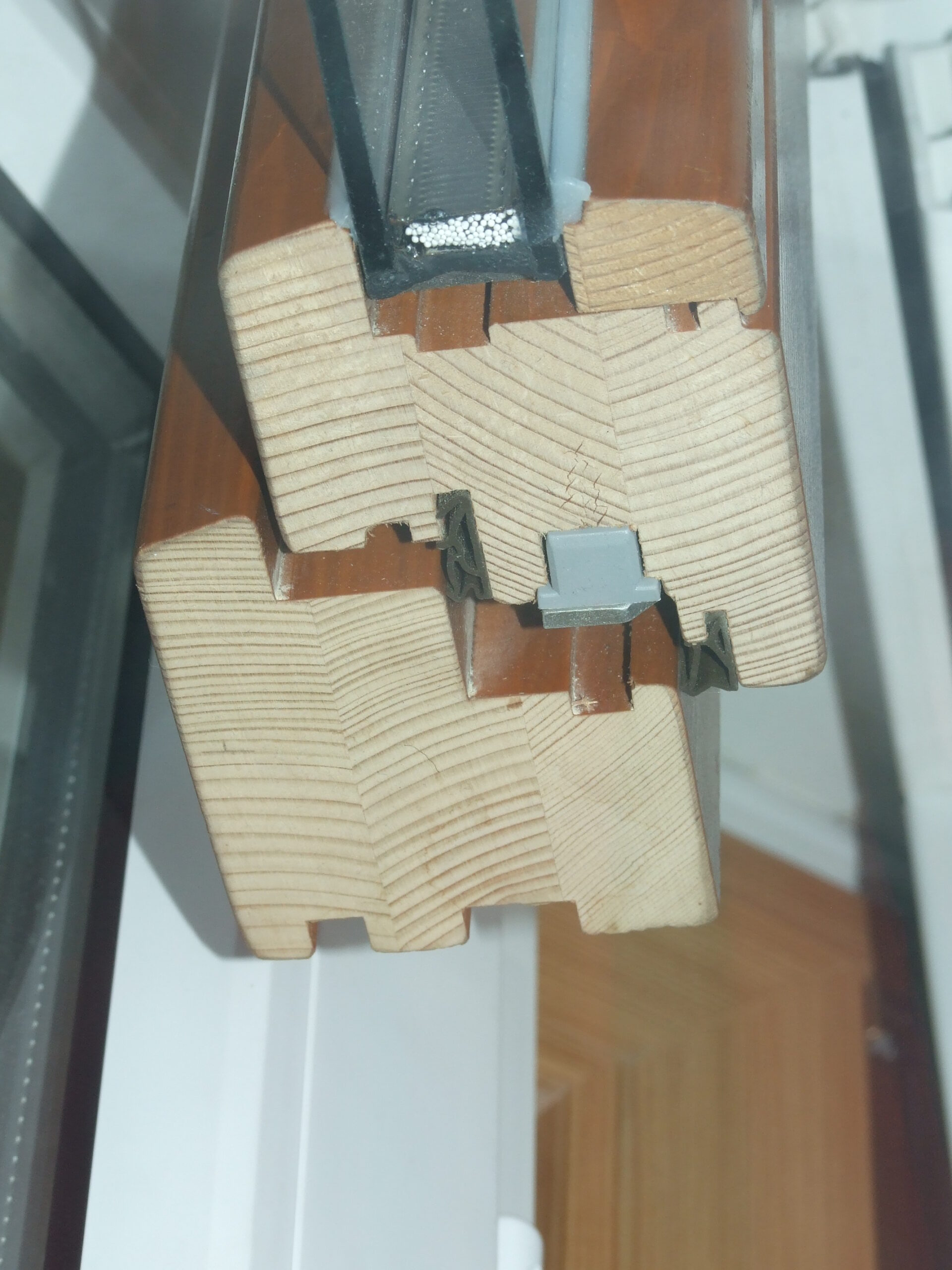
Noise control requires attention to the window’s seals and its connection to the wall—not only the glass. FAA residential sound-insulation guidance identifies gaps and cracks as one of the major routes by which exterior noise enters a dwelling. (faa.gov)
For a noise-focused project, ask the contractor to explain:
- Whether the existing frame stays or is removed.
- How its condition and accessible perimeter gaps will be assessed.
- What sealing work is included.
- How the installation will follow the product’s requirements.
- Who checks sash operation, locks and weatherstripping afterward.
Do not accept “we use foam” as the entire installation specification. Ask what will be inspected, which interfaces will be treated, and what happens if concealed damage is found.
The underlying principle is system performance: a useful acoustic product still depends on appropriate detailing and installation. Indirect paths through adjoining construction can also explain why field performance falls short of laboratory results. (yourhome.gov.au)
At handover, operate every window and ask the installer to address incomplete closure, binding or visibly displaced seals. These checks do not certify an acoustic result, but they create a clear record of installation and operation.
7. Another opening may dominate the room
Consider a hypothetical bedroom with upgraded windows but an older through-wall air conditioner beside the bed. If that opening remains a major sound path, improving the windows further may deliver less benefit than expected.
This is a diagnostic example, not a measured result. Massport’s residential sound-insulation guidance specifically identifies vents and window/wall air conditioners, along with windows and doors, as common routes for exterior noise. Its treatment options include weatherstripping, door replacement and ventilation measures—not windows alone. (loganrsip.massport.com)
Walls and roofs can transmit sound too. “Flanking” describes indirect transmission around the element being improved, such as through adjoining construction or ducts. A window cannot correct every one of these routes. (faa.gov)
Ask for a broader assessment before buying the highest-rated glass if:
- Noise remains intrusive with windows fully closed.
- A vent, door or air-conditioning opening appears to be a competing path.
- Low-frequency rumble is the main complaint.
- The proposed upgrade is expensive but its likely benefit is unexplained.
Have a qualified professional evaluate ventilation changes. The plan should preserve necessary ventilation rather than simply closing openings; sound insulation must work alongside the home’s other functions. (yourhome.gov.au)
8. Compare quotes—and define how success will be checked
Request an itemized quote for the proposed acoustic configuration and installation scope. For a U.S. project, have all prices stated in U.S. dollars, and ask suppliers to separate the window upgrade from perimeter work, finishing, other opening treatments and any professional testing.
Use this final checklist:
| Before signing | What to request |
|---|---|
| Product identity | Series, style, dimensions and glass code |
| Acoustic evidence | Whole-window STC/OITC and supporting report |
| Applicability | Explanation of differences from the tested specimen |
| Installation | Written inspection, sealing and finishing scope |
| Other sound paths | Assessment of doors, vents and nearby penetrations |
| Performance claims | Clear distinction between laboratory ratings and promised field results |
Be cautious about “soundproof,” percentage-reduction claims without a defined test, or a promised indoor decibel level based only on a product rating. ASTM explains that laboratory sound ratings do not directly represent isolation in a building. (store.astm.org)
If a measurable acoustic outcome is essential, agree on a professional assessment and verification method before signing—not after installation.
The buying rule: choose documented performance for the exact window, specify the installation, and investigate competing sound paths. A higher rating is useful evidence, but a quieter room depends on the complete building system. (yourhome.gov.au)